
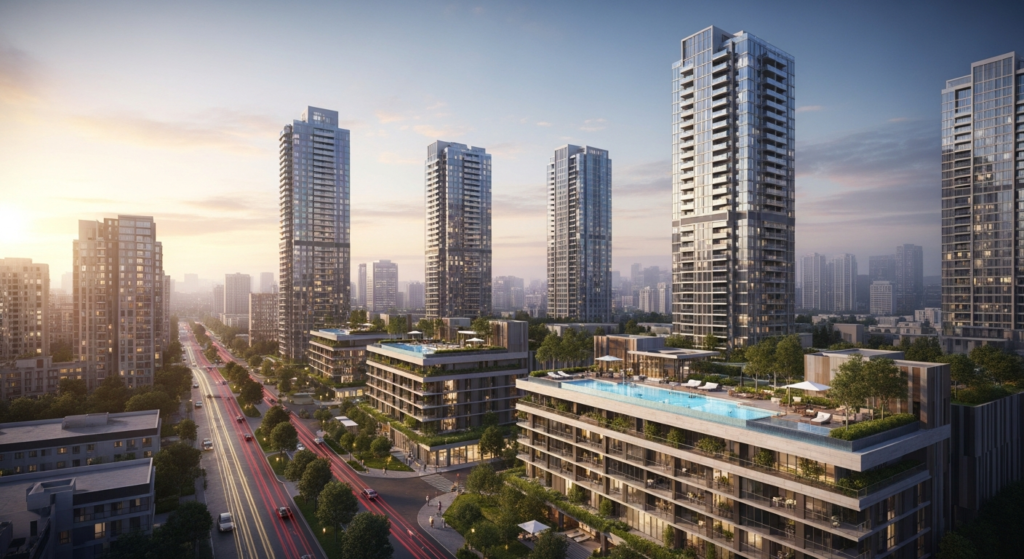

In 2026, India’s real estate industry is distinctly divided into two opposing segments. Even as luxury housing is experiencing unprecedented demand, growth in prices, and investor attraction, affordable housing is experiencing decline, decreased demand and financial limitations. It is an imbalance that represents underlying economic facts like income inequality, wealth concentration to urban areas and changing consumer aspirations. The outcome is a two-speed market that has unbalanced growth and is more polarized.
Explaining the Two-Speed Market.
- Metro cities’ Luxury housing segment (₹1 crore +) is experiencing a high growth.
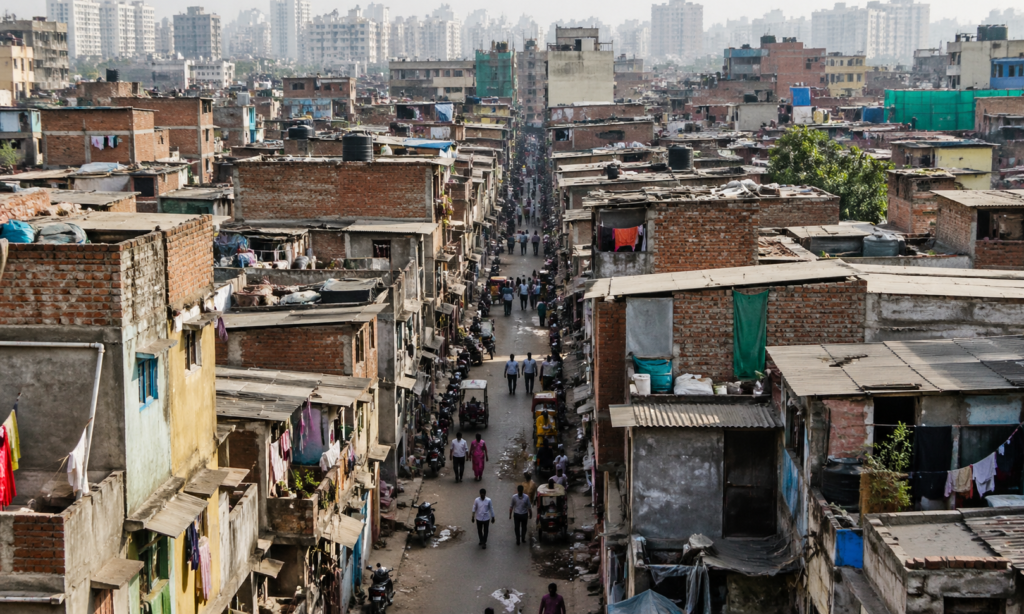
- The affordable housing (which is less than 50 lakh) is experiencing a declining demand and growth.
- Developers are focusing on the high-margin premium projects as opposed to low cost houses.
- The purchasing power and choice of property are being affected by economic inequality.
- The trend in urban demand is towards lifestyle, facility rich houses.
The reason why Luxury Real Estate is Booming in 2026.
- Growth of upper income workers and businesses.
- Big homes will be in demand owing to hybrid work culture.
- Good NRI and foreign investor involvement.
- Increased profitability to the luxury segment as an attraction to developers.
- First-rate facilities and enclosed communities that appeal to consumers.
The Housing Crisis in the US.
Increased Construction Costs.
The build-up costs have become extremely high as there is inflation in raw materials such as cement, steel and fuel. Affordable housing with price caps is challenging to developers to sustain projects at a location that is financially viable. This has had a direct impact of decreasing the new affordable housing launches over the past few years.
Less Government Incentives.
Efforts by governments to enhance affordable housing through support schemes are less effective because of the limitations on funding as well as delays in the policy. Devoid of good incentives like subsidies and tax breaks, developers and buyers are losing interest in this segment.
Weak Purchasing power of Buyers.
Inflation, uncertainty in the jobs and rising interest rates are putting the middle and lower-income population under more and more financial pressure. Even low-price houses are out of reach and this has resulted in reduced demand and procrastination to buy.
Hackneyed Infrastructure in Low-cost Areas.
Housing projects in the peripheral localities, that are cheap to build, are poorly situated with poor infrastructure. These homes are less appealing because they are not connected, lack transport and other basic amenities.
Low Availability of Credit.
Luxury or mid-segment projects have more returns and are less risky, which are preferred by financial institutions to lend. This generates a finance shortfall in affordable housing and slows down the process of construction and project completion.
Major Trends that create the Market.
Increasing Trend of high-end Lifestyle.
The new consumer is no longer emphasizing ownership but lifestyle. The introduction of such features as smart home, wellness options, green areas, and security systems is contributing to the demand towards luxury housing.
The Role of Technology is on the Increase.
The process of buying is changing with the use of digital platforms, property recommendations using AI, and virtual tours. These technologies are enabling the luxury customers to search and invest in luxury homes without stepping a foot outside their homes.
Luxury Price Appreciation.
The rate of increase in price of luxury properties is high as opposed to affordable homes. This is enticing investors who are seeking a greater return and appreciation in value over the long term.
Move to Tier-1 Cities.
Big cities such as Mumbai, Delhi NCR, and Bangalore remain to take a lead in demand. The majority of this demand is however in the luxury and upper mid-segment housing.
Future of Housing in India.
Increased Social Inequality.
The divide between the wealthy and the poor, in terms of luxury housing is growing. This brings a gap on the quality of living and affordability of quality housing.
Urban Infrastructure Stress.
With housing becoming a luxury in the low cost, residents are moving to the informal settlements, straining the infrastructure and services in the cities.
Modifying Aspirations of Housing.
Younger consumers are becoming more aspirational, they would wait or make a bigger investment to get a better house rather than purchasing simple cheap houses.
Development of Rental Market.
As it is becoming hard to own houses, the demand for rental houses is rising. This is particularly the case of young professionals in the urban setup.
Reforms in Policies becoming necessary.
To restore affordable housing and balance the market, the government might have to reintroduce powerful incentives, cut the taxes and enhance the financing options.
Conclusion
The two-speed real estate market in India underscores the fact that there is a pivotal lack of opportunity and access. As luxury housing is still booming because of the increase in wealth, and changing lifestyles, affordable housing is faltering due to economic and structural strains. When this pattern persists, it would further cause social inequality and restrain homeownership by a huge part of the populace. To achieve sustainable and inclusive development in the housing sector in India, a balanced solution such as policy support, incentives to developers and enhanced infrastructure are necessary.
Frequently Asked Question (FAQs).
1. What is meant by a two speed real estate market?
It is termed as the uneven growth where a certain segment of the economy such as luxury housing is increasing at an alarming rate than the affordable housing.
2. What is the reason why the luxury housing in India is on a boom?
Because of the increasing wealth, lifestyle upgrades, high demand on investment and better amenities provided by developers.
3. What is the cause of the affordable housing crisis?
The reasons include high construction prices, inability of buyers to afford the construction, inadequate governmental assistance and inappropriate infrastructure.
4. Is the demand for affordable housing totally dead?
No, there is yet a demand but people cannot afford a home because of the financial limitations.
5. How can we enhance affordable housing in India?
The segment can be revived by government subsidies, reduced levels of interest rates, improved infrastructure, incentives offered by developers.