
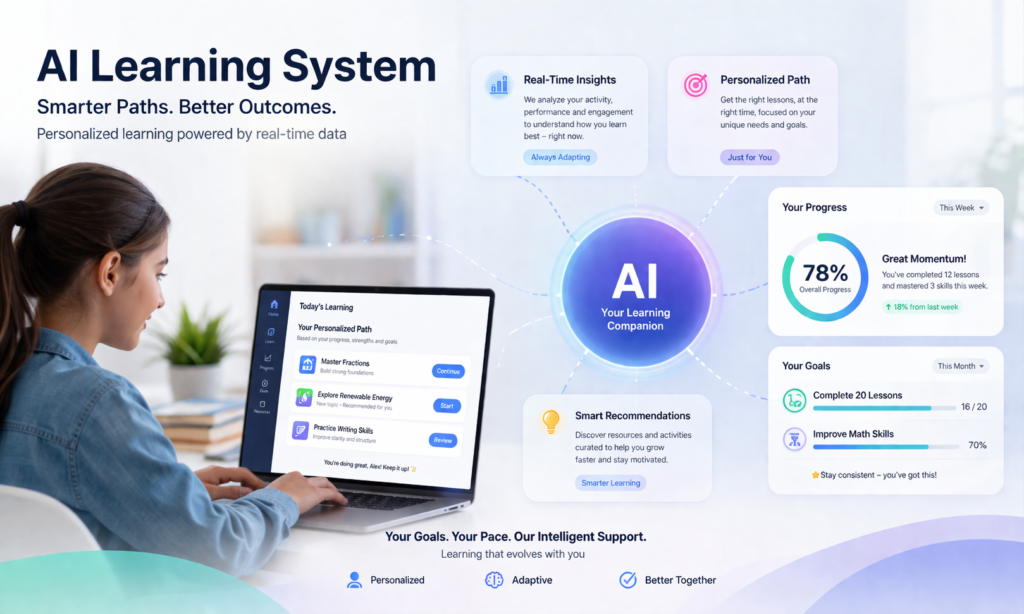

The world of education is quickly changing by incorporating artificial intelligence, automation, and smart data systems. Autonomous Learning Ecosystems are a radical change in which students are not reliant upon fixed curriculum or teacher oversight anymore. Rather, smart platforms will help people follow customized learning paths, which change dynamically, depending on performance, behavior, and objectives. This methodology reinvents education as a process of self-direction, continuous, not a structured, one-size-fits-all process.
Autonomous Learning Ecosystems: What Are They?
- Self-directed learning substitutes conventional classroom learning.
- AI is constantly changing content depending on the behavior of learners.
- No pre-determined syllabus; learning routes are dynamic.
- Live feedback improves the effectiveness of learning.
- Combination of various online learning materials.
Key Characteristics
Self-driven learning systems are created to be intelligent systems, which develop alongside the learner. They monitor all the interactions, be it reading, problem solving or interaction with the content and utilize that information to optimize the learning process. These ecosystems are dynamic and adaptable unlike traditional systems which have a predetermined route and all learners get a differentiated and efficient learning process.
The way they work.
Such eco systems are based on the intertied AI systems that generate and process data in real time. Following this analysis, the platform modifies the complexity, format and delivery of content. As an illustration, when a learner has difficulties in comprehending something, the system can give simpler explanations, other resources or interactive activities. As time passes, the system will be more effective in anticipating and satisfying the needs of the learner.
Advantages of Self-Driving Education.
- Individualized learning and learning at a personal pace.
- Anywhere and anytime access with no time constraints.
- Ongoing skill training according to the real world needs.
- Less dependence on conventional instructional models.
- Evidence-based learning enhances learning.
Hyper-Personalization
This is one of the strongest features of autonomous learning since it allows customizing the experience to a person. The system does not just look at academic performance but also at the learning style, preference and objectives. This keeps the learners glued and motivated since the content will always be relevant and suitably challenging.
Flexibility and Accessibility.
Self-governing ecosystems eliminate time and space constraints. Students are able to study at their own speed as they are able to read the material at any time they want. This is particularly useful to working people and lifelong students who require learning opportunities which are flexible and can fit their lives.
Continuous Skill Development
Unlike those ecosystems that only emphasize theoretical knowledge, these ecosystems focus on practical and dynamic skills. They keep on updating learning material according to trends in the industry and according to the needs of the real world so that the learners can remain relevant in the rapidly changing world.
Data-Driven Learning
All the decisions made in the ecosystem are supported with data. Patterns and the results are analyzed to improve the system and the approach becomes more effective and efficient in the learning process. This will remove the element of guess work and the learners will be guided in the best manner at each level.
The Key Technologies of Autonomous Learning.
machine learning and artificial intelligence.
Implementing AI is the driving force of autonomous learning ecosystems. It synthesizes enormous volumes of data to comprehend the interaction of the learners with the content and also determines trends that can guide future recommendations. The machine learning algorithms become more intelligent and more correct with time, and it makes the system smarter.
Predictive Modeling and Data Analytics.
Data analytics helps the system to keep track of the progress and foresee future performance. Predictive models are able to detect possible obstacles prior to their happening and hence the system is able to implement actions proactively in the form of extra resources or other possible explanations. This will lead to a more efficient learning process.
Natural Language Processing.
NLP enables the learners to communicate with the system via conversational interfaces. This makes it easier and more interactive as questions can be asked and they are answered in a natural human way.
Distributed Systems and Cloud.
Cloud technology is able to make learning platforms available both at the devices and at locations. It is also scalable to autonomous ecosystems to enable them to serve very many users without compromising performance and reliability.
Future of Autonomous Learning Ecosystems
Hybrid Learning Models.
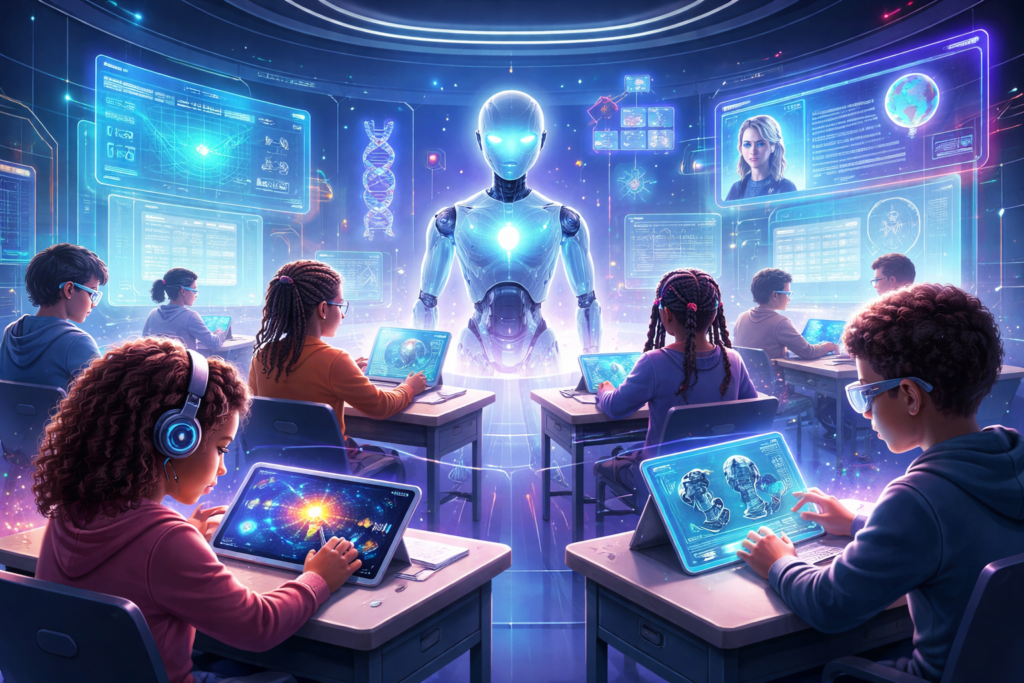
Independent systems coupled with human oversight are likely to become the future of education. The teachers will assume the roles of mentors and facilitators, which will complement AI abilities.
Integration of Lifelong Learning.
Self-regulated ecosystems will contribute to continuous learning in the life of an individual. Learning will not be limited by any particular stages but will become a continuous process.
International Learning Communities.
Such ecosystems can unite learners all over the world, providing them with opportunities to cooperate and share knowledge on an unprecedented scale. This may result in a more accommodative and diverse educational environment.
Conclusion
The ALEs are changing the face of education through their ability to redefine, streamline, and make education more adaptable, personalized, and accessible. Although they cannot completely substitute the human factor, they are quite effective in increasing the effectiveness and efficiency of learning. In a fast-changing world, these ecosystems are bound to be essential in the future of education as people learn more and more, and do so on their own, without incurable education.
FAQs
1. What is an autonomous learning ecosystem?
It is a learning system powered by AI that customizes learning with no predetermined curricula and teacher interaction.
2. Will teachers be phased out?
No, their provision will become mentors, facilitators and providers of emotional support instead of primary sources of knowledge.
3. Do all learners like this system?
Although very flexible, it might not be able to substitute the human interaction requirement especially among young learners.
4. What is the personalization of learning through AI?
AI is used to analyze data, including performance, behavior, and preferences to customize content, pace, and teaching strategies.
5. What are the risks associated?
The main risks are the privacy of data, absence of human interaction, and possible bias of the algorithms.