
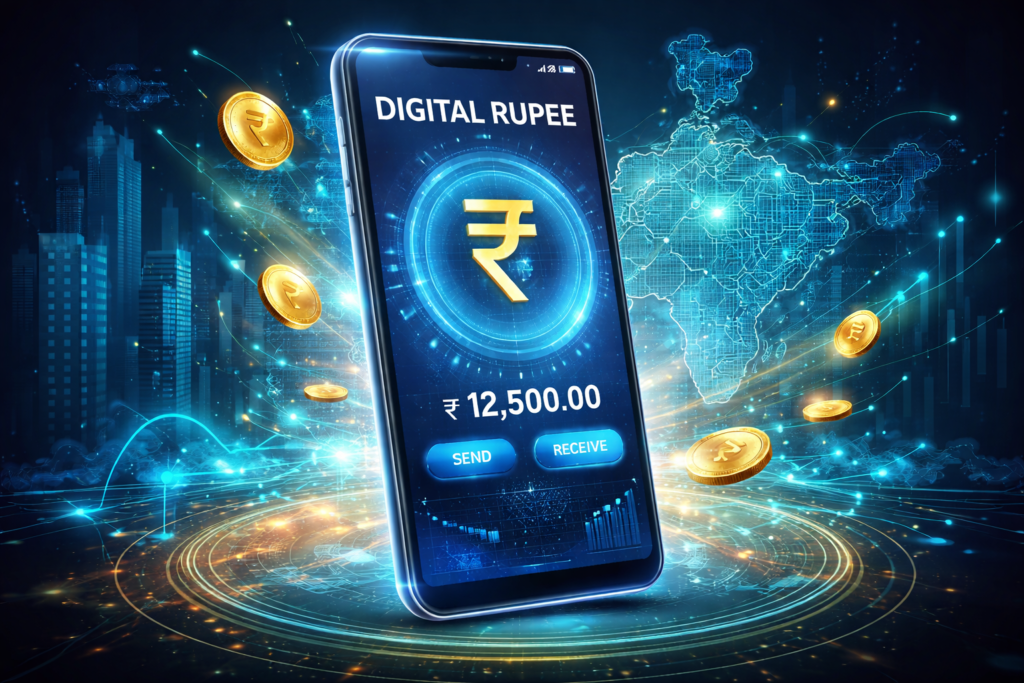

The world financial system is experiencing an unprecedented change as governments and central banks consider the use of digital options other than cash. India’s Digital Rupee is one of the rising examples of the powerful transformation of money, known as Central Bank Digital Currencies (CBDCs) as they combine the trust of the fiat currency with the efficiency of digital technology. With the growing digitization of the economies, CBDCs have the potential of reshaping the way individuals conduct, store, and engage with the financial systems.
What Are CBDCs and What is the importance of them?
Central Bank Digital Currencies (CBDCs) are digital versions of the standard currency of a country, and are issued and overseen by the central bank. In contrast to cryptocurrencies like Bitcoin, CBDCs are not decentralized and have the government as their support, being stable and accepted by law.
CBDCs are important because they help to enhance payment systems, alleviate reliance on cash, and enhance financial inclusion. CBDCs will be able to streamline the financial transactions both within the home country and beyond national borders because settlements are quicker and the costs associated with transactions are reduced.
CBDCs have been actively developed (or piloted) in countries all over the world, such as China, the European Union, and India, indicating a significant change in the way money will operate in the future.
The Indian Digital Rupee.
India has made a positive move towards the same direction by introducing the Digital Rupee. This initiative, introduced by the Reserve Bank of India (RBI) is meant to complement the already available digital payment solutions such as UPI but provide an option based on a sovereign.
The Digital Rupee is characterized by some of their main features:
- RBI-issued and -regulated.
- Offered in retail and wholesale.
- Facilitates real time, safe payments.
- Lessens the use of physical cash.
- Allows offline payments in a few cases.
Digital Rupee will be able to fit in the fast-evolving digital economy in India, and will offer a secure and effective means of digital transactions without the need to use personal payment systems.
The transformations in the financial systems by CBDCs.
CBDCs are not a technological upgrading, but a change in the structure of the functioning of financial systems. Some scenarios may be able to eliminate the intermediaries such as commercial banks by facilitating direct transactions between central banks and individuals.
Benefits of CBDCs:
- Quick and inexpensive international remittances.
- Increased openness and minimized fraud.
- Increased policy control of monetary policy.
- Better financial inclusion of the unbanked populations.
- Real time settlement and tracking of transactions.
This change can greatly enhance the effectiveness of the world financial system, more so in developing economies whereby access to banking infrastructure is low.
Difficulties and Concerns of CBDCs.
Despite their potential advantages, Central Bank Digital Currencies (CBDCs) present several challenges that policymakers must carefully evaluate.
Significant Concerns:
- Privacy Issues: Increased scrutiny of financial transactions.
- Cybersecurity Vulnerabilities: Susceptibility to online attacks and cyber threats.
- Banking System Disruption: A reduction in commercial bank deposits.
- Digital Divide: Limited access for rural populations and those with less technological proficiency.
- Implementation Complexity: High costs and significant infrastructural requirements.
Achieving a suitable equilibrium between innovation, security, and privacy will be crucial for the successful global implementation of CBDCs.
CBDC role in Cross-border Payments.
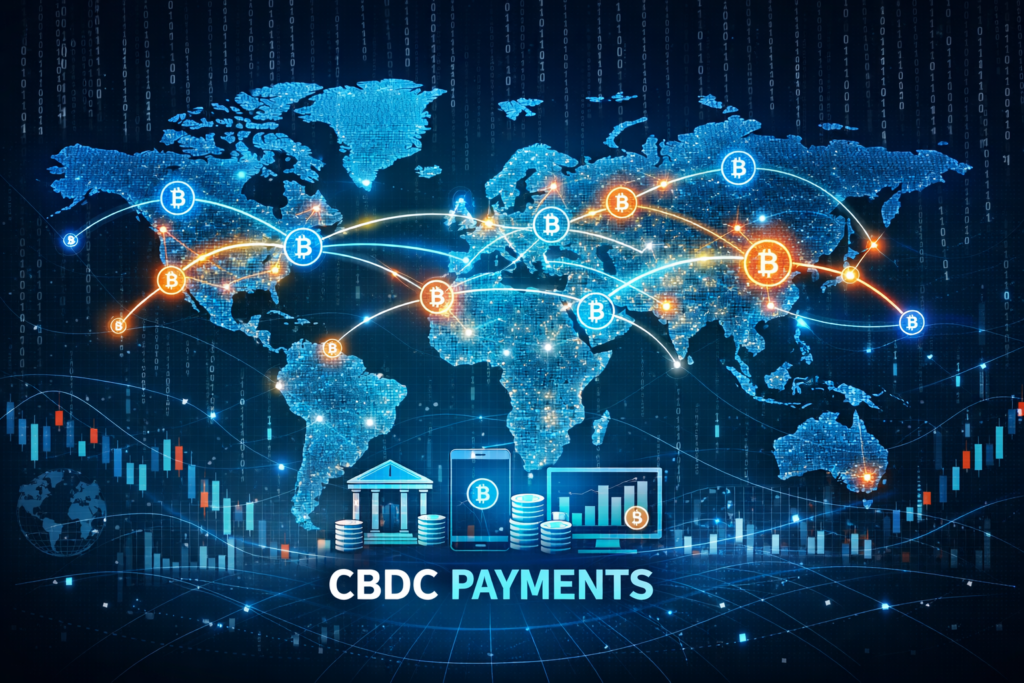
The cross-border transactions are one of the most likely applications of CBDCs, as nowadays they are long, costly, and require numerous middlemen. The conventional systems take up to days before settling international payments and are associated with high charges. This can be made simpler by CBDCs by allowing central banks to make direct transfers or by having an interoperable digital currency network.
CBDCs can make international trade more efficient as it removes the dependency on intermediaries and enables the settlement in real-time. This is particularly advantageous to businesses and migrant workers who depend on remittances because it greatly saves on time and cost of the transaction.
Effects of CBDCs on Monetary Policy.
CBDCs provide central banks with greater control over the money supply and financial flows. CBDCs enable the central bank to implement policies more precisely and in real-time than with traditional systems, where the central bank can only impact the economy through the commercial banks.
As an example, governments may provide financial aid in real-time in times of economic crisis or they may implement programmable money with certain usage requirements. On one hand, this enhances efficiency and effectiveness of policies but on the other hand, privacy and state authority is a matter of concern.
The Future of Money: A CBDC-driven World.
CBDCs will probably coexist with cash, conventional banking, and online payment systems as they become more popular. Governments will be on the frontline in determining the development of these currencies, which will be able to satisfy the demands of the citizens and companies.
The adoption of CBDCs with new technologies such as blockchain, artificial intelligence, and smart contracts has the potential to open up new opportunities, including programmable money, automatic collection of taxes and the distribution of financial aid.
CBDCs may in the long term rethink the very notion of money, making it more accessible, efficient, and flexible to the digital age.
Conclusion.
These CBDCs, and the Digital Rupee in particular, are an important step forward in the development of money. The challenges are there but their potential in the improvement of financial systems, inclusion and in the streamlining of transactions cannot be overlooked. With central banks still experimenting and developing these digital currencies further, the world is becoming a step closer to a day when money is not only physical or digital- it is smart and has been incorporated into our daily lives.
FAQs
1. What is a Central Bank Digital Currency (CBDC)?
A CBDC is a digital form of an official currency of a country, emitted by the central bank of a country and regulated.
2. Does the Digital Rupee equate to the cryptocurrency?
No, the Digital Rupee is officially supported and stable unlike the cryptocurrencies that are decentralized and unstable.
3. What are some ways that people can use the Digital Rupee?
It is available to users in the form of banks issuing digital wallets with which they can conduct their daily transactions.
4. Do CBDCs have any side effects?
CBDCs are developed with high security, yet cybersecurity threats have to be taken care of.
5. Will cash be phased out by CBDCs?
No, CBDCs are not supposed to be cashless, they should be co-existing with cash.