
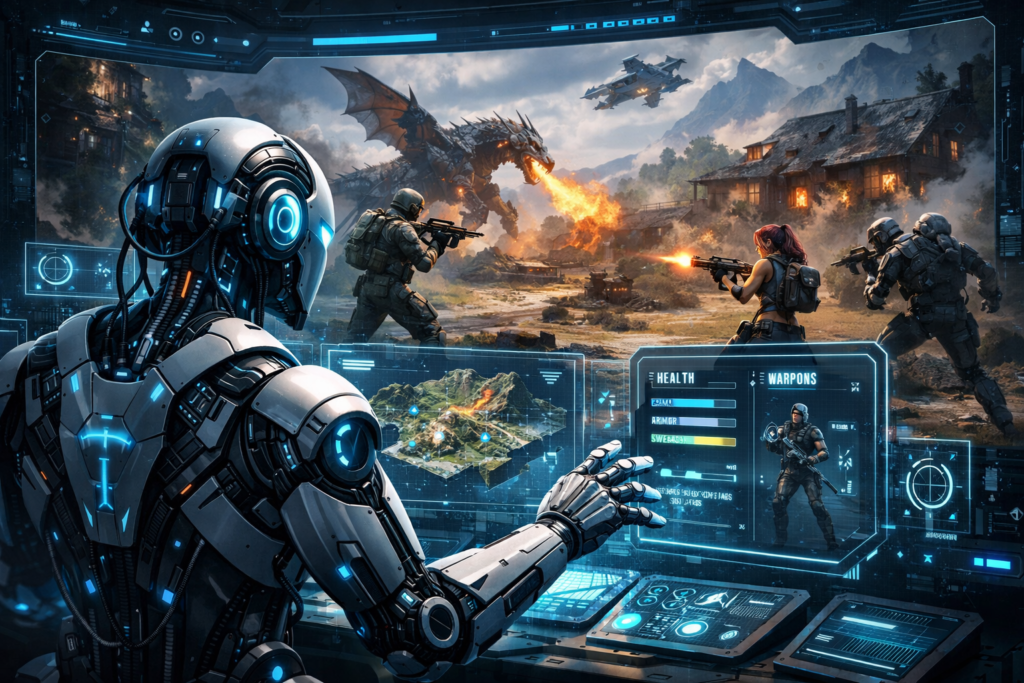

The future of the gaming industry in 2026 is experiencing a giant transformation, which is as a result of the fast development of Artificial Intelligence (AI). Smarter NPCs (non-playable characters) to real-time customization and hyper-realistic scenes, AI is no longer a side-story effect, but the main driver of the game revolution in the modern era. This game revolution is transforming the way games are created, played and played by millions of players across the world.
Artificial Intelligence in Contemporary Gaming.
Artificial intelligence has grown much further than programmed actions. Game developers are now adopting state of the art machine learning algorithms to develop intelligent, dynamic, and immersive gaming environments in 2026. Games are now smart enough to change according to the choices of the player, and each time you play it is different.
AI-based engines use the data about the players, their preferences, and skill level to give them a personalized experience. This will guarantee both amateurs and expert gamers with balanced and exciting gameplay.
AI Innovations in the gaming industry.
Smarter NPCs
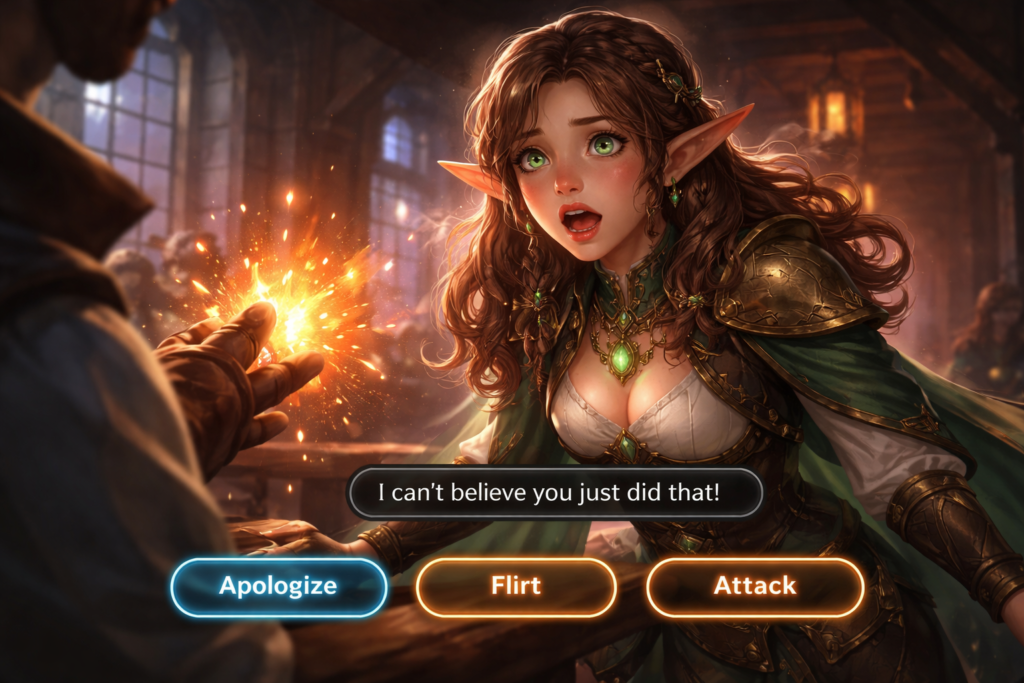
There is now an ability to have characters react dynamically based on player activities, learn, and have emotional responses. The NPCs are not static and predictable anymore and this makes the gaming world more interesting and realistic and changes according to the decisions of the player.
Procedural Content Generation.
AI creates levels, maps, and missions automatically, which provides an unlimited opportunity to play the game. This enables developers to build enormous constantly evolving environments without manually designing each detail to keep players engaged longer.
Personalized Experience
Games change the difficulty, plot and suggestions depending on the player behavior. Through the study of patterns of gameplay individually, AI makes every session balanced, challenging and fun to play depending on the levels of skills.
Enhanced Graphics
AI enhances lighting, textures, animations and visual realism to have an immersive gameplay. The worlds can be made to appear cinematic through real-time rendering and neural network improvements to bridge the gap between the game and the real world.
Multiplayer AI: Game Development.
Development Efficiency
Coding is now automated, bugs are detected and realistic animation is created using AI tools. This saves time on production and enables the developers to spend more time on narration and art of the game.
Multiplayer Enhancement
AI levels the playing field, cheats are identified, and detailed statistics are given. These systems create and sustain competition and provide a comfortable and interactive multiplayer game to both casual and professional gamers.
NLP and voice Integration.
Modern games are using voice recognition and natural language processing to enable a natural conversation with NPCs. Players are able to provide commands or communicate like in real life making gaming more intuitive and immersive.
Ethical Problems and Issues.
AI in gaming provokes the following questions:
Data Privacy
The developers should make sure that the information about players is saved and processed safely. Breach of trust and possible misuse of sensitive information are some of the problems that can arise due to mismanagement.
Addiction Risks
Hyper-personalized gaming may elevate the chances of addiction. It is necessary to monitor playtime and introduce responsible game design to avoid any negative effects on players.
Bias in AI
AI systems should be designed with discrimination being careful. Players should also be provided with fair and unbiased gameplay, which is only possible when developers continuously test algorithms.
Future Possibilities and New Trends.
AI will transform the game to exceed what is currently expected. The development of completely dynamic virtual worlds that develop on their own and systems of storytelling that respond emotionally to the decisions made by the players is future trends. With further development of AI technology, the games will be more realistic, more responsive, and more like reality, delivering the experience that was previously not yet a reality.
Conclusion
The AI revolution in games is still in its early stages, but the effect thereof is already significant. With smarter NPCs through to the personalized gameplay and high-end graphics, AI is transforming everything in the industry. With the ever changing nature of technology, gamers can look forward to more detailed and immersive experiences that will expand the limits of imagination and immersion. Gaming is intelligent, adaptive, and very exciting in the future.
Frequently Asked Questions (FAQs).
What is the current use of AI in the gaming field?
NPC behavior, game design, personalization, graphics improvement, and player analytics are all applied with AI. It allows the developers to make the gaming more responsive and more immersive.
Does AI have the ability to make full-fledged games by itself?
AI is capable of creating game elements, and it can be helpful with development, yet the development of a game cannot be fully automated. AI tools are used together with design development by developers to create full games.
What do we mean by AI-driven NPCs?
These are characters who are free to think, learn and act in a dynamic way rather than using pre-determined scripts. This produces realistic interaction and an even more real player experience.
Is AI simplifying or complicating games?
AI will adapt the challenge according to the skill of the player and generate a fitting challenge. This makes the beginners and advanced players have an enjoyable gameplay.
What are the dangers of AI in the game?
The key threats are data privacy, addiction and possible bias. The developers need to put up protection measures in order to ensure fairness and the safety of the players.