
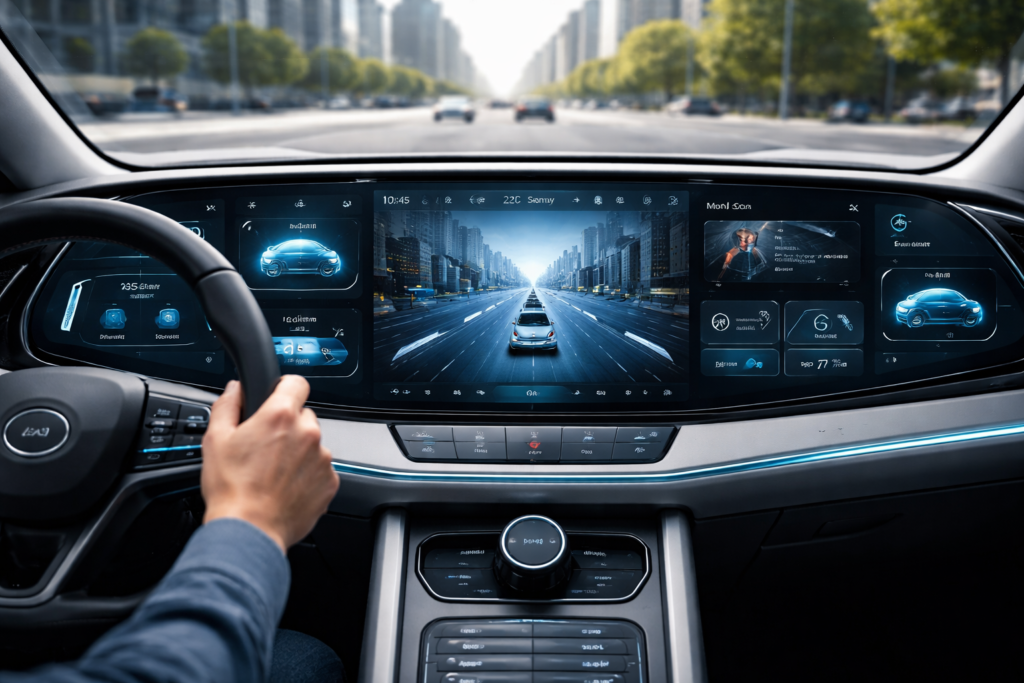

The world automotive sector is taking a new dimension, whereby software is emerging as the driving force behind the innovation of vehicles. Software-Defined Vehicles (SDVs) lead this change as they have shifted the focus of engineering from the old hardware-oriented engineering to intelligence-based on software. This revolution is not only transforming the manner in which vehicles are constructed but also how they are being transformed as they mature.
Due to the increasing demands of smarter, safer, and more connected products by consumers, automakers are adopting SDVs to keep pace. These cars are physiologically programmed to keep on expanding with the software upgrades and are thus more flexible and more future-proof than ever.
What Are Software-Defined Vehicles?
Software-defined vehicles are vehicles where most of the fundamental functions in an automobile, like engine functions, infotainment systems, safety features, and connectivity, are software-managed and controlled. The SDVs are not similar to the conventional ones; they use centralized computing systems that allow uninterrupted communication among various parts.
The capability to update using over-the-air (OTA) is one of the most significant qualities of SDVs. This enables the manufacturers to have new features, better performance, and correct their faults without physically interfering with them. SDVs are in a lot of ways similar to smartphones, as software updates constantly improve the user experience.
Major Advantages of Software-Defined Vehicles.
- Software upgrades on a continuous basis.
- Better safety with advanced driver aids.
- One-on-one and interrelated user experience.
- Fewer long-term maintenance expenses.
- Smart city infrastructure integration.
- Rapid innovation and feature release.
The changing nature of SDVs in the car industry.
Hardware-to-Software Change.
Conventional cars are based on heavy use of mechanical parts and hardware systems. On the contrary, SDVs focus on software as the key and make it more flexible and scalable. This change allows manufacturers to innovate quicker and be more efficient to meet the needs of the marketplace.
Best Driving Experience.
The driving experience is very personalized with software-defined vehicles. With smart systems of navigation, voice-controlled interfaces, etc., drivers can communicate with their vehicles more intuitively. Other features like traffic updates in real time, remote control over the vehicle, and the introduction of the smartphone make driving convenient and fun.
State-of-the-art safety and reliability.
The benefit of SDVs is safety. These vehicles are able to detect possible risks and implement preventive measures due to real-time data analysis and predictive algorithms. There are also advanced driver assistance systems (ADAS) like lane-keeping assist systems, automatic emergency braking, and adaptive cruise control that are all controlled by complex software.
Artificial Intelligence Implementation.
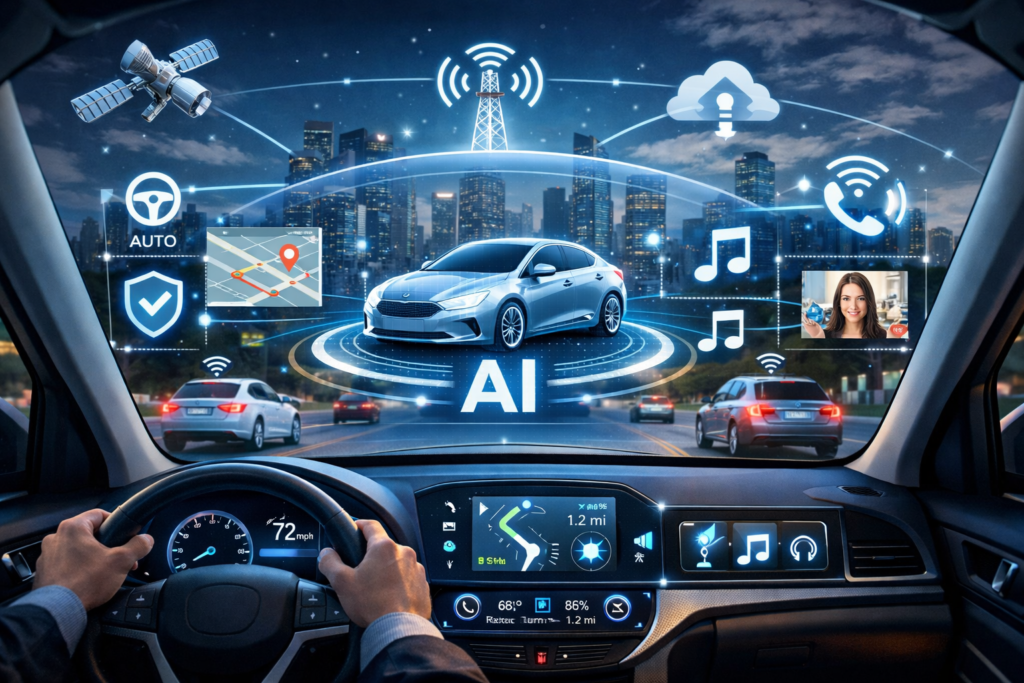
Artificial intelligence is important to ensure that SDVs operate effectively. The AI-based systems assist with the optimization of routes, driver behavior tracking, and autonomous driving. These technologies are ever-learning and improving, and thus, vehicles are becoming smarter as time goes by.
Difficulties of the Implementation of SDVs.
Cybersecurity Concerns
The more attached vehicles are to each other, the more they are exposed to cyber threats. The primary concern of the automakers is the protection of sensitive data and the integrity of the systems. These risks can be mitigated by strong encryption, frequent updates, and secure software architecture.
High Development Costs
The creation of an advanced software system needs a lot of research investment, infrastructure, and professionalism. Automakers have the difficulty of striking a balance between these costs and achieving affordability to the consumers.
Regulatory Uncertainty
The mass change of SDVs has grown faster than the regulations in most areas. Governments are in the process of setting standards and policies to retain safety and conformity.
Final Outlook of Software-Defined Vehicles.
On the Way to Autonomous Mobility.
Fully autonomous driving is being established on the foundation of software-defined vehicles. With an increase in software capabilities, vehicles can be programmed to run with minimal human intervention; thus, it will be safer and more efficient.
Connected Ecosystems
SDVs will in the future belong to a bigger interconnected system that will interact with smart cities, traffic systems, and other vehicles. This connectivity will contribute to the reduction of congestion, safety, and overall movement.
Sustainability and Efficiency.
SDVs will be relevant in terms of sustainable transportation. Fuel efficiency, better battery work of an electric vehicle, and lowering of emissions can be optimized through software.
Conclusion.
Software-defined vehicles are changing the automotive industry in that cars are becoming smart, flexible, and interconnected. These vehicles can be updated with new software, and that is where they achieve unparalleled flexibility and long-term worth.
SDVs will prevail as the new technology in transportation in the modern world. Companies investing in such an innovation will be at the forefront of the future, and customers will have access to safer, smarter, and customized mobility options.
Frequently Asked Questions (FAQs).
Q1. What is a software-defined vehicle?
A software-defined vehicle is a vehicle whose software has been used to control most functions and thus can be updated, customized, and perform better as time progresses.
Q2. How do SDVs receive updates?
They are able to obtain updates remotely using over-the-air (OTA) technology through an internet connection.
Q3. Are SDVs safe to use?
Of course, they also have evolved safety measures and constant upgrades, but cybersecurity is a significant focus.
Q4. Are SDVs in favor of autonomous driving?
Yes, SDVs are needed to support the autonomous driving capabilities with the help of AI and real-time data processing.
Q5. What is the future of SDVs?
The SDVs will take over the automotive sector and provide smarter, safer, and more connected mobility experiences.